Extracting Good Mining Policy in Kyrgyzstan
Recent Articles
Author: Jack Halsey
05/07/2026
 shutterstock.com
The critical minerals industry in Central Asia is at a crossroads and in Kyrgyzstan critical decisions need to be made. China is securing every possible source of critical minerals to supply its own technology sectors, as well as for Beijing’s processed critical mineral industry to export to the global market. The United States and the European Union are striving to strengthen supply chains while at the same time working to decouple supply independence from China.
With global interest in developing critical mineral extraction and processing facilities, Central Asia can be an attractive partner for substantial foreign investors. Kazakhstan and Uzbekistan have already been adapting over time to clear the way for foreign investment, while Kyrgyzstan has remained behind the pack. However, with the recent conclusion of the Regional Ecological Summit and the parallel Central Asia Climate Conference, Kyrgyzstan’s policymakers and local communities have an important opportunity to address deregulation issues and to adapt restrictive environmental provisions in their mining regulations to encourage foreign investment.
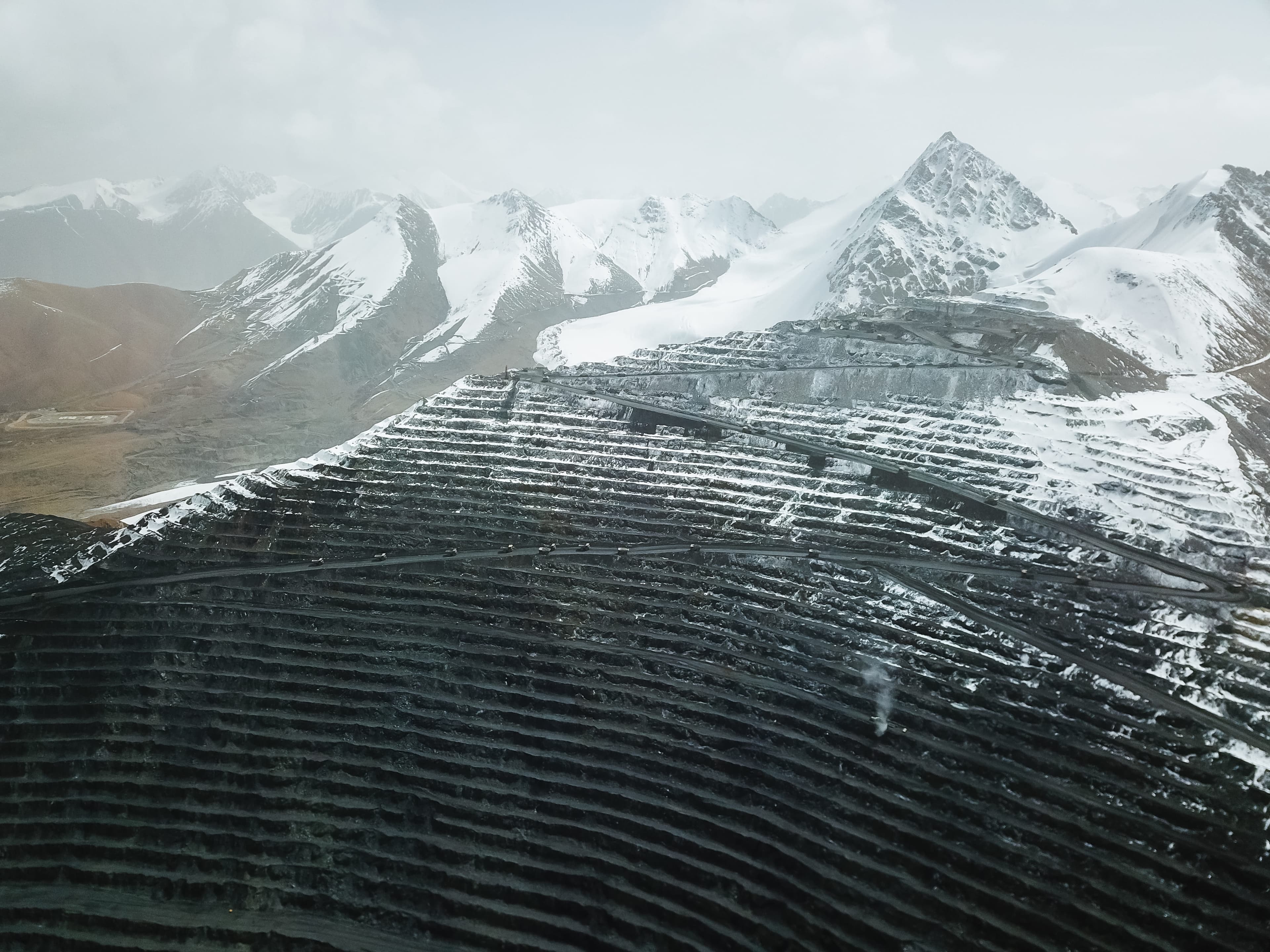
Mining, especially gold mining, has played an important role in Kyrgyzstan’s national economy, accounting for almost 13% of GDP and over 60% of exports. In addition to gold, other critical minerals like tungsten and antimony are also found throughout the country but to lesser degrees. However, extraction of these metals is overseen by stringent regulations that discourage many international investors.
Most of Kyrgyzstan’s mining industry legislation is adopted from the top down, starting with the President or Parliament. Local governing authorities, on the other hand, are limited in their legislative functions, unable to adopt local provisions to regulate mining activities. Numerous protests in the past have produced opposition to mining, generally raised at the local level. The country’s primary legislation for managing the subsoil sector, however, is the “Law on Subsoil” (2018) that regulates, strictly from the national level, ownership of minerals, geological information, and the responsibilities of various state and local authorities.
Unlike in Kyrgyzstan, subsoil legislation in other states focuses on the transition from exploration to mine development, establishing clear property rights to mineral deposits. This form of legislation operates on the assumption that the geological potential of a country is unknown and requires greenfield exploration—a high-risk, high-reward strategy utilizing predictive ore genesis models and geological mapping to search for mineral resources in unexplored virgin areas. In such an unknown geological landscape, the licensing system is on a first-come, first-served basis for whichever company wants to invest in the greenfield exploration. Although this system has unknowns and risks, it still allows for new mines and more investment to be brought into the sector for further growth and expansion.
In comparison, Kyrgyzstan’s regulation emphasizes the process of transferring the right to exploit mineral deposits, while Bishkek continues to hold mine rights. Rather than allowing companies to explore and discover new sources, the government controls a set list of known deposits that they have maintained since the Soviet era. The benefit of this system is that the government can rent out these mines to companies, setting higher rents, since the companies have known deposits and do not need to risk capital on greenfield exploration. The downside, and the biggest risk that is becoming evident today, is a dwindling list of mining opportunities. Bishkek’s set list of deposits is shrinking, as mines on its list run dry, with neither new exploration incentivized nor new deposits discovered.
Along with legislation that doesn’t allow for growth, the mining industry in Kyrgyzstan is bogged down by environmental incidents that face constant protest by local communities. From the environmental side, 92 locations have been known to contain 250 million cubic meters of mining waste. Recently in 2025, Kumtor, the largest gold mine in the country, was warned that one of its high-altitude waste dumps is shifting closer to the Kumtor River that feeds into the Naryn River and eventually the Syr Darya River. This is a serious threat to the water supply for the entire region. Nor is this the first environmental incident from Kumtor mine. In 1998, a traffic accident led to nearly a ton of cyanide spilling into a river near the village of Barksoon, and in 2013 shifting rock masses placed residential areas, administrative buildings, and a weather station at risk.
While Kyrgyzstan’s concerning environmental record may be a primary reason for the local community protests against mining operations in their communities, tensions with China also contribute. China has increased its footprint in Kyrgyzstan, both through supporting Chinese business entry into Kyrgyzstan, as well as by funding infrastructure projects like the China-Kyrgyzstan-Uzbekistan railway.
Although the influx of Chinese-backed projects in Kyrgyzstan signal significant investment, local residents are not directly benefiting. Instead of leading to an increase in employment in Kyrgyzstan, these projects often utilize Chinese workers, and this has led to housing shortages and rent hikes. Local tensions erupted in 2025 when a brawl broke out in northern Kyrgyzstan between dozens of Kyrgyz and Chinese construction workers. So far, local protests and environmental impacts have not swayed Bishkek to adapt its approach to mining. But, with a new regional swing towards combatting climate change, Kyrgyzstan might now have enough impetus to bring about broader reform and development.
The Regional Ecological Summit in Astana, KazakhstabKazakhstan in late April 2026 hosted each Central Asian head of state with each leader signing a declaration on “Environmental Solidarity of Central Asia.” This agreement officially aligned the countries’ positions on environmental issues. Alongside the Summit, the Central Asia Climate Conference had the important task of tying regional needs to global climate negotiations. One of the most important conversations that occurred during the conference focused on water usage. With water levels dropping in the Caspian and, especially, the Aral Seas, the glacier melt from Kyrgyzstan has become increasingly important.
At the Summit, Kyrgyzstan’s President Sadyr Japarov specifically addressed how his country plays a crucial role in supplying water to the region but is not compensated enough: “For decades, we have maintained water allocation limits while providing storage and release services. Kyrgyzstan ensures safety of hydraulic infrastructure and invests significant resources in water management. However, we do not receive compensation in the form of fossil fuels.”
An easy solution would be to increase Bishkek’s compensation, though the other regional states would be hesitant to increase compensation until assurances are made that water sources are fairly apportioned and protected. Given the potential momentum of protecting water sources to increase compensation, local leaders and policymakers in Bishkek would also need to update their mining regulations.
To begin, Kyrgyz policymakers would need to adapt subsoil legislation to be enforceable for a longer term. Considering the importance that mining contributes to the country’s GDP, Bishkek would likely need to relax subsoil laws to allow for greenfield exploration. Should Bishkek wait much longer, the nation will find itself with dozens of empty mines and no new potential sources. Once the mines are empty and the government does allow for exploration, the damage will already be done. There will be too long of a delay between the end of production from the previous mines and the beginning of extraction from newly discovered deposits.
It would be good to pair new subsoil legislation that allows for greenfield exploration with more stringent environmental protection laws. Along with discovering untouched deposits, the Kyrgyz government could build trust in local communities surrounding future mines by ensuring that companies are playing by the book and not disregarding safety regulations. By treating environmental protection seriously from the beginning, there will be more support from the public for more projects.
Bishkek also needs to assess the record of its potential investors. Some companies seek to enter the Kyrgyz market despite a history of environmental concerns. At a gold-copper mine in Ecuador, protesters clashed with police and the army, for instance, claiming that the project posed an imminent threat to the headwaters of major watersheds and undermined the livelihood of local communities. This same issue would be a critically sensitive locally and regionally for Kyrgyzstan.
On top of that, in January 2026, it was reported that the Kyrgyz Tulkubash and Kyzyltash gold mines had been acquired. However, other than government aligned news outlets, no government officials or departments like the National Investment Agency have provided an official statement confirming such announcements. Any track record of upsetting local communities or dismissing environmental concerns could also raise serious concerns and unrest in Kyrgyz communities, given the country’s past mining history.
The nation’s mining regulations need to change. Mines are drying up and accidents leading to environmental incidents continue to occur. Global players seriously want to diversify their critical mineral supply chains and want to invest in the region. This investment potential, along with the region-led push to combat climate change, should be the wake-up call for Bishkek’s policymakers to begin amending their subsoil policies. Not only will this push to adapt subsoil legislation support the national economy, it will also be an opportunity to build public support and patch up relations about environmental incidents that have caused tensions throughout the country.