No More Fuel for the Fire? What the Russian Fuel Crisis Means for the Caspian Region
Recent Articles
Author: Julia Mohr, Lilly Horrigan
07/16/2026
 shutterstock.com
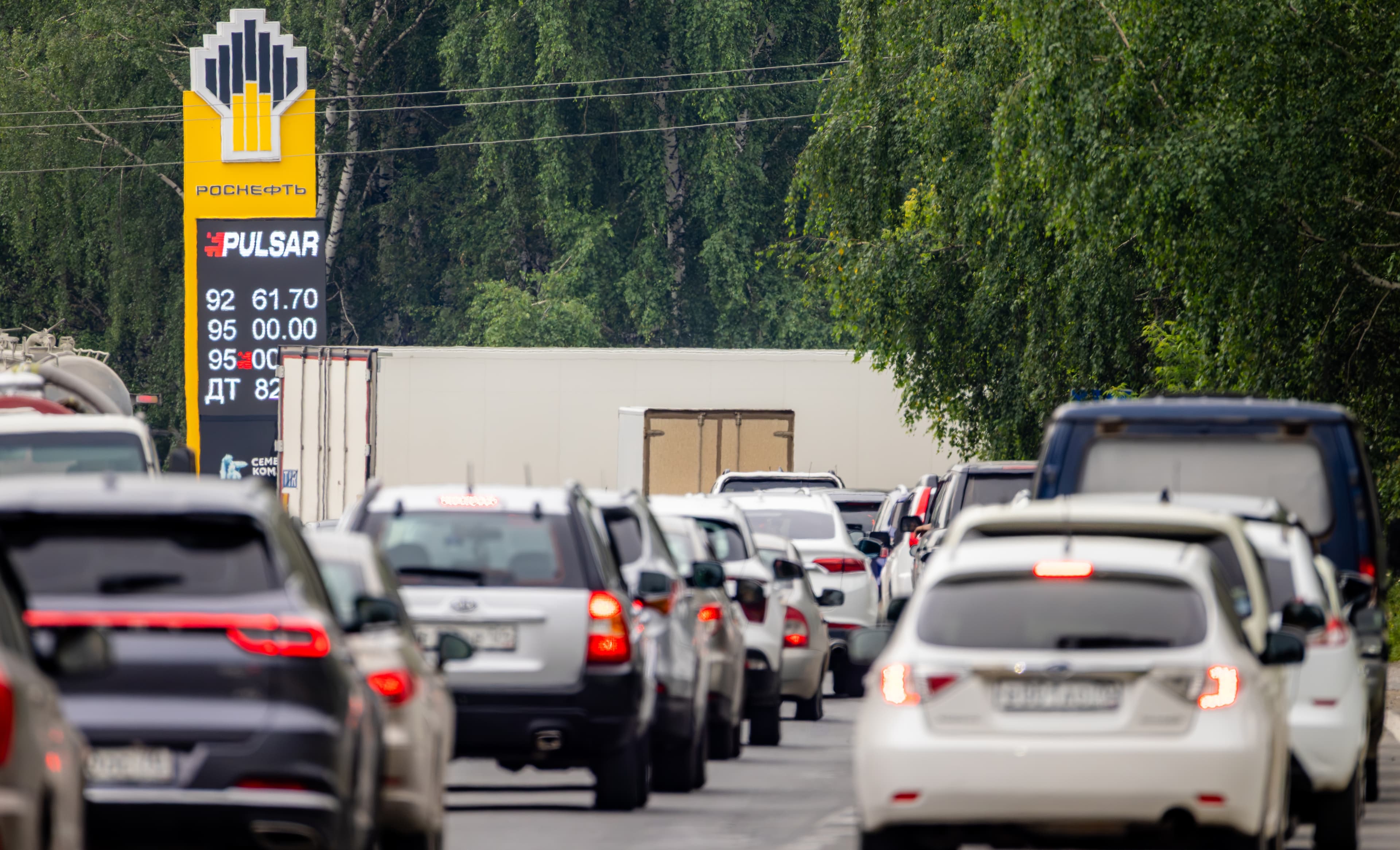
Despite its vast energy wealth, Russia is now facing a growing fuel crisis of its own making. Sustained Ukrainian drone attacks on Russian refineries are reducing Moscow’s refining capacity, cutting gasoline and diesel output, and forcing the Kremlin to import fuel and impose export restrictions.
The shortages mark a new phase in the war as Ukrainian drones routinely strike deep into Russian territory and even into Moscow, despite Putin’s efforts to shield urban Russians from the war’s repercussions. The strikes are not only reshaping the outlook of the war but quickly spilling over into the Caspian neighborhood. Ukraine strikes reach the Russian refineries processing Kazakhstan’s own oil and gas. While much of the former-Soviet region still relies on Russian oil and fuel supplies, Russia is no longer functioning as an energy security guarantor. Instead, it strains the energy security of Central Asia and the Caucuses – one of many effects of the war that have steadily eroded Russia’s ties with the region.
Kazakhstan And the Fuel Crisis
While Ukrainian drone strikes have long threatened Russian energy infrastructure, recent developments have pushed the sector to a breaking point. Ukrainian drones recently incapacitated the Omsk Oil Refinery, the last of Russia’s ten largest oil refineries to be hit since late April. Two weeks prior to the Omsk attack, drones struck a Russian refinery in Orenburg, the primary refining facility for oil and gas condensate from Kazakhstan’s Karachaganak field. The attack cut the field's output by nearly a quarter. As Ukrainian attacks escalate, Russia has faced blackouts and even Putin himself admitted to the rising gasoline shortages. Like the many before them, these strikes reach directly into Kazakhstan’s own energy sector, placing Astana in the crosshairs of war it is not fighting.
As Putin scrambles to prevent the public backlash that comes along with high prices at the pump, Russia reportedly has turned to Kazakhstan for 50,000 metric tons of AI-91 and AI-92 gasoline to ease domestic shortages. That makes up around 25 percent of the most common fuel in the region and of Kazakhstan's monthly output.
However, Energy Minister Erlan Akkenzhenov told reporters that no such request had been made. He also noted that Kazakhstan is prepared to consider the terms of such an exchange, if a request is made and domestic supplies remain stable. Regardless, it is clear that Russia is looking for partners to step in during its time of need. Russia having begun gasoline imports from India and Belarus makes imports from Kazakhstan a plausible scenario. Russia’s need for imported fuel is growing, increasing pressure on Kazakhstan's market. Kazakhstan has already imposed export restrictions and stricter regulations on border crossings as Russian drivers search for fuel.
It is increasingly clear how dependent Kazakhstan remains on Russia’s energy infrastructure, especially the Orenburg refinery and the Caspian Pipeline Consortium, both of which are vulnerable to the war. Already looking to diversify export routes, Kazakhstan's President Kassym Jomart Tokayev announced his intention to increase oil exports via the Baku-Tbilisi-Ceyhan pipeline, bypassing Russian routes. With the capacity to meet domestic refining needs, Kazakhstan can likely absorb the shock from Russia’s fuel crisis in the short term, keeping domestic gasoline supplies stable. Refining crude oil for export, and finding reliable export routes for Kazakh oil and gas, however, will be a challenge as attacks continue.
Shockwaves Across the Region
Russia has also targeted Ukraine’s energy infrastructure, sometimes with unexpected consequences for third countries. A Russian Shahed drone attacked one of Azerbaijan’s SOCAR fuel stations in the south of Ukraine near Odesa on July 5. The attack, only the latest in a series of strikes on Azerbaijan’s property – including a SOCAR oil refinery, an embassy in Kyiv, and an honorary consulate in Kharkiv – provoked outrage from Baku. In a meeting with the Russian Ambassador, the Foreign Minister of Azerbaijan expressed suspicion that the attacks were deliberate.
While Moscow has not commented on the SOCAR attack, on the day of the strike the Russian Ministry of Defense claimed that the Russian military heavily bombarded Ukrainian fuel and energy facilities connected with the Ukrainian military. Furthermore, the Ministry of Defense asserted that the strikes had been carried out in response to the Ukrainian strikes on Russian oil and gas facilities which lay “beyond the zone of the Special-Military Operation.”
Whether deliberate or careless, the strikes have done damage to Russia’s already dire standing in Baku. President Ilham Aliyev has condemned the attacks alongside Ukraine’s Volodymyr Zelensky, expressing support for the Ukrainian side despite Russia’s attempts to maintain influence in the country.
While the strikes spark tensions, Azerbaijan has little to fear when it comes to Russia’s energy crisis because of its ample energy supplies. In fact, the crisis may only create more customers as Russia-dependent partners in the region seek to diversify their supplies. Regional cooperation has become the foundation for reducing dependence on Moscow. Following a historic peace agreement in 2025, Azerbaijan began its first fuel exports to Armenia since the 1990s. By supplementing Russian fuel supplies to Armenia, Azerbaijan has created an essential foundation for a lasting peace between the two countries and a lifeline for Armenia as it strengthens ties with the European Union.
Across the Caspian Sea, smaller neighbors are feeling the burden of dependency. Kyrgyzstan, which relies on Russia for 90 percent of its gasoline imports, began experiencing shortages in late June. Because the country has only between one and six weeks’ worth of reserve, Kyrgyzstan has since requested assistance from Kazakhstan, Azerbaijan, Turkmenistan, Uzbekistan, and Belarus to keep its pumps supplied. Belarus and China have contractually agreed to supply jet fuel and diesel.
Tajikistan faces a similar situation. Tajikistan is not only heavily dependent on Russian oil and gas, but receives Russian oil primarily from the recently attacked Omsk Oil Refinery. In response to the fuel crisis, the government of Tajikistan will artificially lower prices and, like Kyrgyzstan, seek other fuel exporters. Additionally, Tajikistan recently began the search for oil and gas within its own borders, led by specialists from the Chinese National Petroleum Corporation. Even energy-rich Uzbekistan has become increasingly reliant on Russian imports, after a 2023 agreement with Gazprom guaranteeing yearly Russian gas imports and reduced pressure to expand its domestic gas industry.
Taken together, these episodes describe a Russia that has stopped functioning as an energy security guarantor and started becoming an energy security liability. The Soviet-built pipelines that once provided the region with Moscow's cheap fuel have become an economic vulnerability. Dependence on Russia, long treated as a fact of geography and history, appears now more like a risk to be managed.
This erosion could matter for the war itself, a conflict that has reshaped regional stability over the past four years. Russia’s leverage over its neighbors is essential to the architecture of its war effort, from diplomatic cover and sanctions evasion to transit and trade. All the while, Russia will have to grapple with public reactions to fuel shortages, pressuring Moscow to evaluate the costs of its aggression. The end of this war has looked imminent many times before, and each prediction has proven premature.
A single summer of shortages will likely not be a deciding moment. But if Ukraine continues such sustained costs on Russia’s energy infrastructure, the consequences might prove structural rather than temporary. Each offline refinery, each export denied, and each neighbor forced to seek alternative suppliers increases the region’s broader realignment away from its historic dependence on Russian.