Beyond the Silk Road: How Central Asia Is Reinventing Itself for the Tik Tok Generation of Travelers
Recent Articles
Author: Lilly Horrigan
04/22/2026
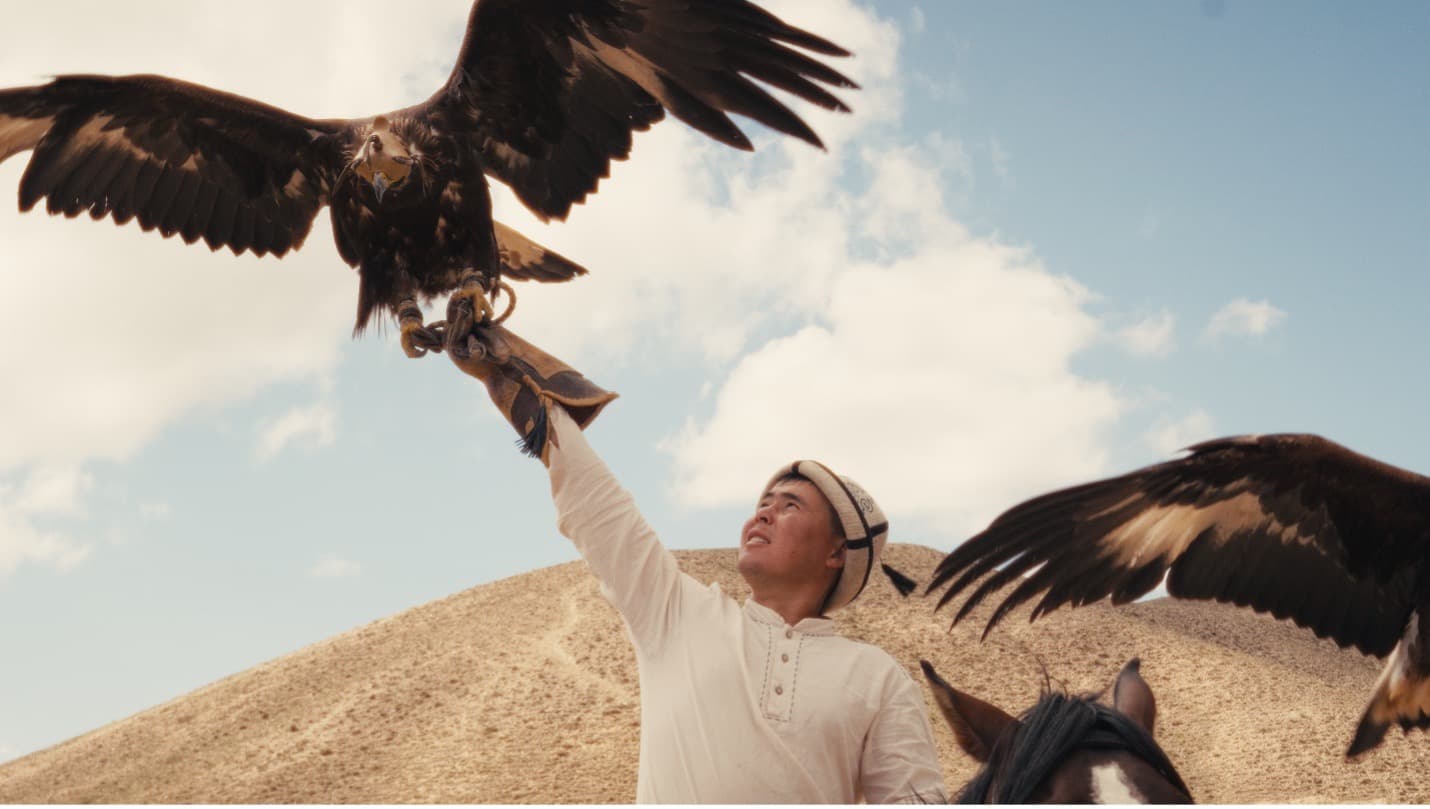 A traditional eagle hunter in Kyrgyzstan. Photo provided by Conan.
In recent years, the mountains and lakes of Central Asia have become a familiar sight on Instagram “Explore” and TikTok “For You” pages. The natural beauty of Kyrgyzstan’s alpine landscapes, the ancient Silk Road cities of Uzbekistan, and the “Mars-like” terrain of Kazakhstan’s Mangystau region are attracting tourists seeking a vacation off the beaten path. The Tien Shan Mountains in Kyrgyzstan even made it onto The New York Times list of “50 Places to Go in 2026.” This growing visibility of this clean industry is creating new economic opportunities for Central Asian countries. International tourist arrivals in Uzbekistan have risen by 73% since 2019, while tourism accounted for 4.3% of Kyrgyzstan’s GDP in 2025. Governments are responding with new investments, including multi-million-dollar infrastructure projects such as dozens of Boeing Dreamliner aircraft and a high-speed rail link between Tashkent and Khiva designed to cut travel time to the ancient city in half.
Given tourism’s economic potential, the region has strong incentives to sustain this momentum and improve visitor’ experiences. To better understand who is travelling to the region and what they are drawn to, CPC surveyed tourists, social media influencers, and tour guides about their experiences. These conversations suggest that Central Asia’s relative remoteness is both its primary appeal and its most significant constraint.
Social Media Spotlight
Instagram captions like “5 things we wish we knew before traveling to Central Asia”, “10 must-do things in Central Asia”, and “Traveling to Central Asia isn’t for everyone… here’s why” are flooding Instagram. These posts highlight destinations like Song Kul in Kyrgyzstan, Khiva and Samarkand in Uzbekistan, Lake Kaindy in Kazakhstan, and the scenic Pamir Highway in Tajikistan. Videos of vivid blue lakes tucked into grassy mountains and towering walls of blue mosaics in cities once conquered by Alexander the Great help frame Central Asia as both uniquely untouched and strikingly ancient.
|
|
|
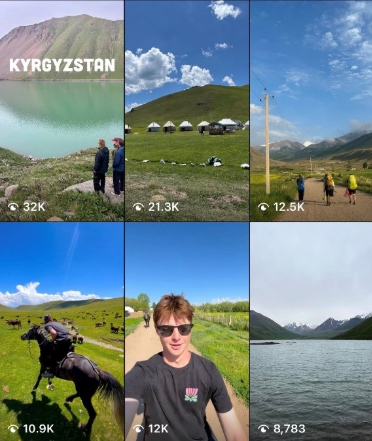
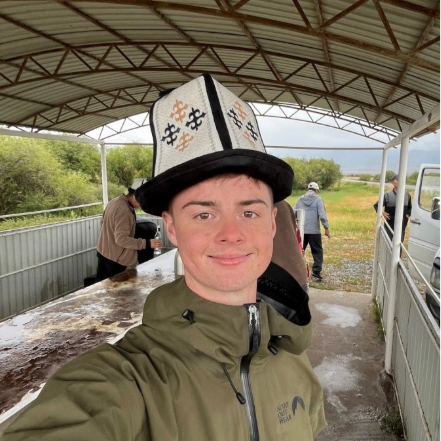
A snapshot of Justin’s Instagram page (left), side_quest_project, and profile picture (right).
For many creators, this relative obscurity is precisely the draw. Justin, a 24-year-old travel creator from Canada, posts travel content on Instagram and Tik Tok from all over the world, including content from a trip to Kazakhstan, Uzbekistan, and Kyrgyzstan. He described Central Asia as an ideal destination for those looking to go somewhere less “done.”
His most-viewed video on Instagram from travel to the region, a 17-hour train journey across Kazakhstan, captures this appeal. With no internet, a bunkmate who doesn’t speak English, and little more than endless steppe outside the window, the experience contrasts sharply with the connectivity and convenience typical of European travel. Justin often relies on hitchhiking, and while it’s an unpredictable form of travel, he also gains the chance to meet and learn from locals along the way. It’s precisely these precarious, more unusual circumstances that draw viewers in.
Justin also posts about long hikes and guided horse treks in the remote mountains of Kyrgyzstan. In one video, he mentions that the best part of Kyrgyzstan is taking refuge in yurts in the mountains. In yurts, he and his friends try local cuisine like kumis, fermented horse milk, as locals enthusiastically share their culture. Justin commented that the people in Central Asia are “super kind and always want to help you.” Many other creators highlight similar experiences, often finding unexpected connections with locals facilitated through gestures and translation apps, despite the language barrier.
|
|
|
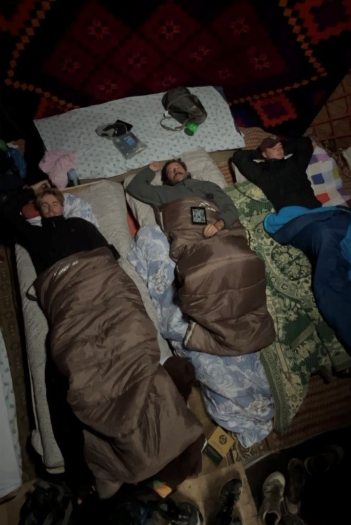
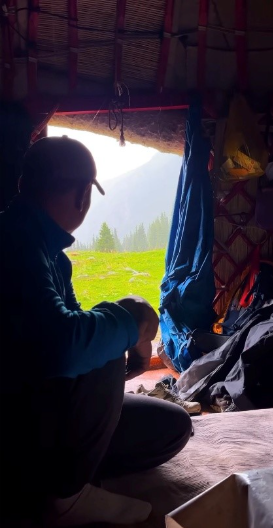
Screenshots from Justin’s Instagram show him and his friends lying in a yurt (left) and a local man who hosted Justin sitting in his yurt (right).
Justin commented that most of the other tourists he met in the area are older, more experienced travelers. Experienced visitors have the benefit of wisdom navigating less popular destinations, but younger travelers don’t have the same advantage. Instead, social media posts serve as essential guides for interested young travelers navigating an unfamiliar place with a different language. Influencers often share insider information on the best spots and the best tour guide companies that organize excursions and accommodations in remote areas.
Cost is another recurring theme; many videos emphasize the region’s affordability, positioning it as accessible to younger travelers who might lack the budget for more traditional destinations. Many videos advertise how cheap food, hotels, and travel are, with captions like “This is what $1.20 USD can buy you in Kyrgyzstan” and “This is the best budget-friendly country I have been to after visiting 60+ countries!”
First-Hand Experiences
Interviews with non-creator travelers reinforce many of these trends. Conan, a 25-year-old from Washington, D.C., cited social media as an initial influence, recalling videos of horse trekking in Kyrgyzstan that made him think, “Wow, this looks sick!”
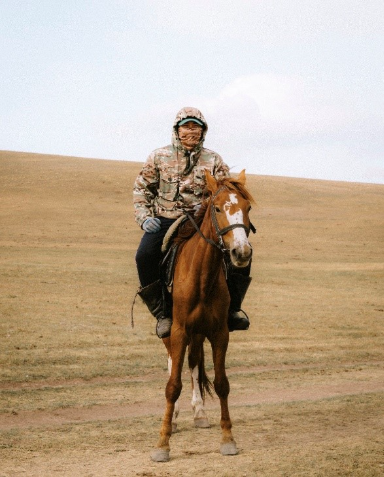
Man riding a horse in Kyrgyzstan. Photo provided by Conan
During his trip, Conan spent time in Bishkek, Song Kul, and Altyn Arashan, including a three-day horse trek through the Tuz-Ashuu Pass. He described staying in yurts with local families as a defining experience: “They didn’t treat you like a guest; they treated you like you were at home.” These slower, immersive interactions, like teaching a local kid at the yurt camp how to use his camera, were among the most memorable moments of his trip. This immersion also allowed him to see classic eagle hunting, a traditional practice in Central Asia.
Ohm, a 25-year-old traveler who grew up in Connecticut, visited Kazakhstan with his fiancée, Delaney, in 2024 and plans to visit again soon to see the otherworldly landscapes of the Mangystau region. Ohm was also drawn to the region’s stunning landscapes, like Lake Kaindy. The turquoise lake is tucked into forested mountains, famous for the tall, thin white tree trunks sprouting from the middle of the lake, earning it the name “the sunken forest.” However, upon arrival, he was impressed by the level of urban development in Almaty. As a self-proclaimed coffee nerd, he was surprised to see a thriving coffee scene in Almaty with a generous number of “third-wave” coffee shops. This contrast between remote natural beauty and modern urban amenities broadens the region’s appeal, offering both adventure and relative comfort.
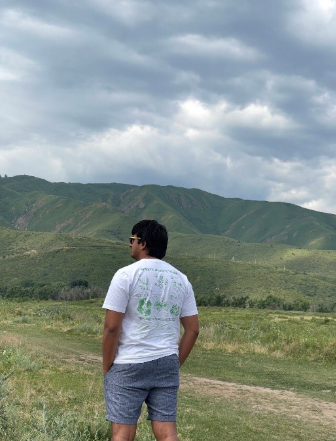
Ohm in Kazakhstan. Photo provided by Ohm
Appreciating the offerings of urban centers, Dennis, an American, moved to Almaty in 2013 after earning a master’s degree in Eurasian Studies. He began blogging about his walks around the city, posting pictures of architecture and mosaics. In 2015, his walks inspired him to found WalkingAlmaty, a walking-tour company that now hosts primarily Western visitors.
Echoing Justin’s comments, Dennis agreed that most tourists he encounters are experienced travelers. At the same time, Dennis noted, “More and more you hear they have seen some kind of social media content about Central Asia.”
With particular insight into Kazakhstan, Dennis also highlighted a structural challenge for the country. Unlike Uzbekistan, which has a clear identity centered on Silk Road heritage, or Kyrgyzstan, which emphasizes ecotourism, Kazakhstan has struggled to define a singular tourism narrative. He sees Almaty as a potential gateway, offering a blend of contemporary culture with a thriving museum, dining, and nightlife scene, as well as easy access to more remote destinations.
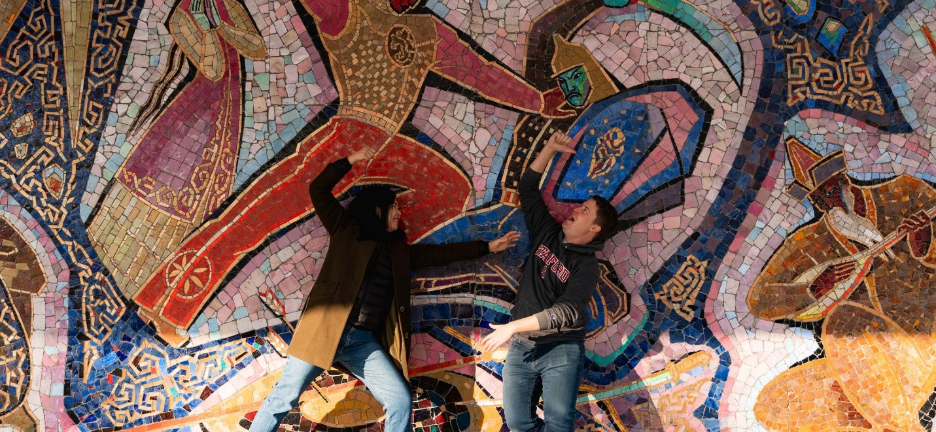
Dennis in front of a mosaic in Almaty, Kazakhstan. Photo from WalkingAlmaty.com
An Uphill Battle
Central Asia’s relative inaccessibility remains a double-edged sword. Underdeveloped infrastructure can complicate travel, particularly outside major cities. As a result, visitors often rely heavily on small-scale tour operators, many of whom are reachable only through platforms like Instagram or WhatsApp. With little information about the region available online in English, these tour guides are a lifeline for visitors who do not speak one of the local languages. In fact, the lack of English sources online inspired Dennis to pursue WalkingAlmaty.
On social media, these same challenges are in many ways what attracts viewers. Content often highlights not only scenic landscapes but also the difficulties of reaching them: food poisoning, bare-bones accommodations, or physically demanding hikes. Food poising is an especially frequent problem on long mountain journeys, including for Justin who got food poising three times. Justin also documented his trek to Ala-Kul Lake, with steep climbs, mud, and loose shale at elevations approaching 3,900 meters. But the views along the way seem to make the journey more than worthwhile.
The travelers interviewed for this piece were men, but female content creators note that these conditions, particularly remoteness and limited infrastructure, raise more serious concerns about personal safety when traveling alone. At the same time, a growing number of women travel to and document the region, offering their own perspectives on navigating these risks.
Central Asia is offering young people not just an opportunity but a challenge to see untouched landscapes. Navigating this rugged terrain creates a sense of accomplishment and the kind of story you simply can’t get elsewhere. Conan reflected, “It’s because of the trials and tribulations you face in the country that are honestly why I think it’s so memorable to look back on…. About 80% of my group ended up getting sick or injured, but we can look back at all our struggles and laugh about them now. And it’s those types of crazy stories that I’ll always remember fondly.”
As Central Asian countries invest further in tourism infrastructure and the region grows in popularity, the nature of the challenges that define travel there will inevitably evolve. In deciding where and how to develop, governments should keep in mind what draws many visitors in the first place: largely untouched landscapes, genuine hospitality, and the kind of unfiltered, sometimes difficult experiences that are increasingly rare elsewhere.
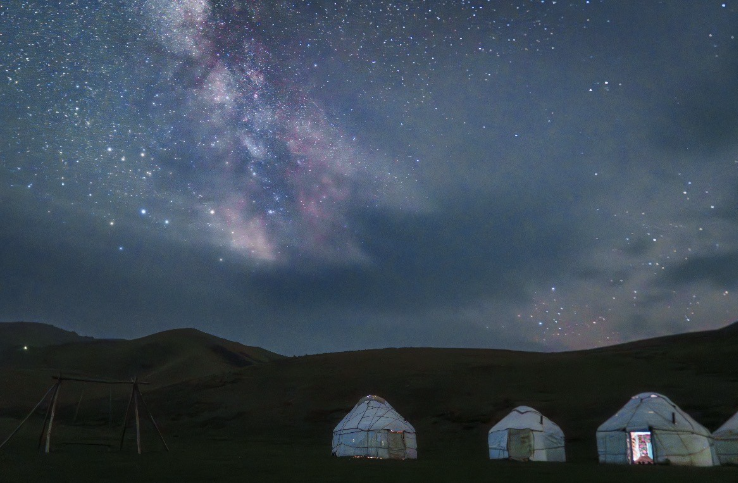
Yurts in Kyrgyzstan at night. Photo provided by Conan.